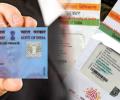
To validate and continue using the existing PAN cards, citizens will have to link them to Aadhaar. Or else, they will be permitted to use Aadhaar instead for filing returns and while making other high-value transactions, specified under the Income Tax Act.
Nirmala Sitharaman has designed the revenue mix in such a way that while Centre's share in taxes would grow a massive 25 per cent, states' share would grow a dismal 6 per cent.

For insurance intermediaries like brokers, insurance repositories, third-party administrators, etc, 100 per cent FDI may be permitted.

The aim of the programme is to increase the water table in the stressed areas through dams, ponds, and afforestation. According to a NITI Aayog study, by 2030, the country's water demand is projected to be twice the available supply, implying severe water scarcity for hundreds of millions of people and an eventual 6 per cent loss in the country's GDP.

After assuming power in 2014 with a full majority of its own, the BJP-led NDA government started an ambitious process of reforming labour laws in the form of codes aimed at making the framework less cumbersome with a variety of alterations. It had planned four codes each for industrial relations, wages, social security and welfare, and occupational safety, health and working conditions. To this end, 35 central labour laws were to be converted into four codes that would have had the virtue of streamlining labour relations. But none of the proposed code Bills could be converted into a law principally because neither trade unions nor industry representatives came on board. They hold the key to India's low-growth-high unemployment paradigm but the government may struggle to push them through this time as well. Somesh Jha explains why
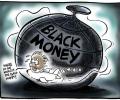
The studies found that sectors with the highest unaccounted income included real estate, mining, pharmaceuticals, pan masala, gutkka and tobacco, bullion and commodity markets, film industry, educational institutes and professionals.
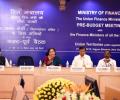
Sitharaman exhorted the states to work together with the Centre, stating that while the Union government sets the direction of economic growth, it is for the states to ensure effective implementation on the ground.
'If there is a technical issue and the borrowers can resolve it within 30 days, you don't have to go through the bankruptcy court.' 'If the borrower is expecting a large disbursal of a facility or expecting a payment or receivables, in such cases it becomes practical to give a window for taking care of such circumstances. 'If banks had aggregated the assets and benefited with a long relationship with borrowers and now when assets get into a trouble, it is incumbent on banks to find resolution and take responsibility.'

This meeting has led to the deferment of the Goods and Services Tax (GST) Council meeting by a day.

The scheme, which will be effective from July 1, 2019 would benefit 36 million employees and 1.28 million employers. The ESI Act applies to factories with 10 or more workers and provides for medical, cash, maternity, disability and dependent benefits to employees drawing a salary of up to Rs 21,000 per month.

'The plan is to secure nod of the Union Cabinet and other relevant regulatory approvals within the next three months,' a senior finance ministry official said, requesting anonymity.

Despite a steady collection rate, the government faces a steep Budget target of Rs 6.1 trillion for CGST for 2019-20.

The US is pressing for taxing digital economy through the 'marketing intangibles' principle and the UK through a 'user-base' principle.

The report, floated recently, comes a few days after the government cancelled the registration of Bengaluru-based NGO Infosys Foundation for alleged violation of norms in receiving foreign grants.

The focus will be on tackling the unfinished agenda requiring immediate attention like tax structure for solar projects, uniform tax rate on state-organised and state-authorised lotteries, taxing non-potable alcohol besides certain changes in the law, extension for NAA and rate rationalisation.
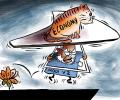
There is talk of a fresh approach to a new labour code as well as reforming land acquisition laws in such a way as to be politically.

The rates of price rise in many services used by the common man, including hospital and nursing, cook, domestic help and bus (fare), among others, have also touched double digits during the last four years, putting a burden on disposable income.
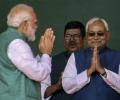
'He has attacked our enemies in their own backyard.'

Infrastructure projects were the top picks for MPs, with 40% of the total funds spent on the development of railways, roadways, pathways and bridges.

CBDT feels 30% growth in income-tax not feasible.
 © 2026 Rediff.com - Investor Information - Advertise with us - Disclaimer - Privacy Policy - Sitemap - Feedback - About us - Terms of use - Grievances